One person’s personal, and therefor possibly highly biased, view.…
By Lorenzo Bedini
Prelude
Bill Bruford once said that the best thing to happen to him was being born in 1948.
I was born in 1958, and, yes, I seem to have been destined to be late ever since. I had to watch the ‘sixties swing from the wrong side of the boarding school fence. Indeed, the ‘sixties continued to swing into the early ‘seventies, but by the time I gained my freedom in 1975 the party was over. All that was left was the clearing-up and the hangovers.
Decent music still existed, but it was extremely hard to find. The rest of the media and the music industry itself wanted us to only be aware of, and to listen to, such bands and artists as the Bay City Rollers, Sweet, Gary Glitter, Slade…. Most of whom were actually great musicians, bursting with talent and skills they were never allowed to fully exploit. Dumbing down was with us even then. You had to have friends with record collections if you were to discover the delights of Pink Floyd, Genesis, the Who’s ‘Quadrophenia’ or Led Zeppelin’s ‘Four Symbols’. Furthermore, I found myself surrounded by people who were quick to tell me I shouldn’t like Barclay James Harvest, that there was something not-quite-nice about someone who enjoyed Jethro Tull or King Crimson. In fact, all these bands were supposed to be ‘over’ (though history tells us a rather different story.) So, anyway, I was too late again. On listening to one of my sound-on-sound demos, a music publisher winced and said what a pity I hadn’t written that song five years earlier. ‘In the hands of the right band it would have made a lot of money.’
Late again!
By the end of the ‘seventies the UK was dominated by an aggressive fashion marketing drive in which the very cheapest materials, such as bin-liners, could be sold at vastly – I mean VASTLY – inflated prices, as clothing. God knows what a half decent safety pin would cost you on the King’s Road… but you certainly wouldn’t have wanted a fully decent one.
Meanwhile, the music press was damning bands and audiences alike if they didn’t conform to this new fashion dictate. You were scum of the earth if you so much as thought of buying a ticket for Caravan or Rush, let alone the Moody Blues.
Stepping out of drama college and into 1980’s recession (too late again), I attended a number of auditions for any band that wasn’t Punk. Sorry, I just wasn’t a fan, and moreover I hated being pushed in a direction I really didn’t want to take. I was still too young and green to realise that nothing is forever.
So I returned to Norfolk, where I felt I could breath. One day, stopping outside Cleff’s Music Store in Pottergate, Norwich, I spotted a small card in the window: ‘Local band seeks guitarist. Influences: Hawkwind, Yes and Emmerson, Lake and Palmer. Call Sean on….’
I think it was the only telephone number I’ve ever successfully memorised long enough to make the eight-mile journey home. We only had landlines in those days.
First Movement
Having fixed a date on which Sean wasn’t going to be washing his hair, I set off for the preliminary meeting.
Sean Godfrey, in those days the lead singer, lived in New Costessey, (Noo Cozzy to the locals), just outside the city. As well as very clean hair, he also possessed everything a rock group needed except a drum kit, and the drummer, Dave Beckett, had one of those. I was able to play Sean a few of my songs – ‘Dreams (Deus ex Machina)’ being one of them – on a beautiful Ibanez 12string he had left out on the sofa. I also produced a tape of instrumentals I had recorded on four-track in the hope of flogging as library music. Home recording was still a few years away, so being able to play someone a recording wot I done was a bit of a luxury. I was invited to audition at the next rehearsal, the following Thursday evening.
This was held in the bass player’s girlfriend’s parents’ house in Norwich’s ‘Golden Triangle’. There, I met Graham Chilvers (bass), his girlfriend, Heather, who could play the piano but didn’t want to join, and Dave Beckett (drums). The band was called No Parallax, and Graham explained to me that they weren’t just looking for a guitarist, but someone who would write the material and generally lead the band. Anxious to please, I ran through a few songs I’d written, and Graham remarked, ‘You didn’t tell us you could sing as well.’ (The jury’s still out on that one.)
Afterwards, it was round to Dave’s house for coffee and discussions. Graham popped the question: ‘So, do we have a band?’
Well, it seemed we did. The only problem was no one had thought to take the advertisement out of Cleff’s Music shop window.
Now Sean, as many of you know, is very kind, well-intentioned and timid. When another guitarist contacted him, Sean simply didn’t have the heart to turn him away.
This guitarist I shall refer to as Crow Magnon. He was tall, bony, with long hair and slightly mad eyes. I later discovered that he liked to begin the day with two hefty spliffs for breakfast, before going to work, ‘teaching’ children under seven years old. He had a Gibson twin-neck 6/12 string, and a Marshall stack, neither of which he was afraid to use. I went onto second guitar, backing vocals and keyboards. To add to Sean’s Wasp synthesizer, I bought a Vox Jaguar single manual organ, which without a Leslie speaker tended to sound a bit churchy. But when put through a fuzz box it didn’t.
Crow Magnon had a great ability, except that he expected everyone to play along with him while lacking the discipline to return the favour. When he ‘wrote songs’ he in fact created rather complex and very loud guitar parts, round which the rest of us constructed arrangements and wrote lyrics. When it came to my songs, he wouldn’t play any of the guitar parts, so I had to, which meant keyboards were out, while he would shriek and wail through the whole thing without regard to little details such as time or key. I tried to point this out to him, and he came back at me smiling with, ‘Yeah, man! That’s what jazzers call ‘playing outside’.’ He also suggested we should organise a gig.
In my unasked-for and undeserved role as Band Leader, I called the vicar in near-by Tasbrugh, who put me onto the man in charge of renting out the village hall. For the princely sum of £5.00, including the licence to sell beer, I booked a date; a Friday night sometime in November 1980.
Meanwhile, we’d all expressed dissatisfaction with the No Parallax name, not least because there was a band going round called No Parallex. When the village hall man asked me what the band was called (’Just say anything, so I can write it in the diary’) I blurted out the first thing that came into my head. ‘Ah-hum… Airbridge Ceremony!’
At the next rehearsal, I told the others the news, apologising for the name, but they all said, ‘Hey, yeah! I like that. Just drop the ‘Ceremony’. ‘Airbridge’ is cool.’
The gig was a living nightmare for all of us except Crow Magnon, who wailed and screamed to his heart’s content, and the audience – mostly bikers – who, when we finished, remained seated waiting for the second half. So, after a can of unreal ale, we went back on stage and played everything again. Of course, the great thing about having Crow Magnon in the band was that no one could hear that I didn’t know one end of a keyboard from another, but I was deaf for the next two days.
By now, however, I was having a crisis of self-confidence, and seriously considering leaving the band. The simple fact was that my songs were awful. Every one of them was a mess. Crow’s sounded pretty good…. And then it hit me. We were all pulling our weight in his pieces, but when it came to mine he was pulling them to shreds with his atonal shrieks and wails. As it happened, the rest of the band felt pretty much the same: they wanted Crow gone, and because I was the newest member out of the rest of us, I was deputed to remove him.
The two of us met at the Adam and Eve pub in Eaton, where, over a pint of more unreal ale, I explained that I was leaving the band. Crow tried not to look pleased, and began making sympathetic noises, but I cut him off with: ‘Er… but the only thing is, I’m afraid, the rest of the guys are coming with me… and we’re keeping the name.’ D’you know, I really believed that this was the kindest way of telling him.
*
Our first Norwich gig was even more daunting. This time we’d be playing White’s, a much-respected venue, and it wasn’t going to be in front of an audience of accommodating bikers. We were going to perform to complete strangers, and we’d chosen a musical form that had been utterly denounced and vilified by the media and the fashion police. It was a trial run on a dead night, but while we were setting up the audience just kept coming. The place was filling up with people who had surely come with the sole purpose of canning us off stage. Someone pierced my bubble of anxiety to tell me that a journalist wanted to talk to me. Why me? Anyway, I took a deep breath and decided to be charming rather than defensive.
To my surprise, Richard Friar, now Richard Penguin, was actually very supportive of progressive rock, and quite encouraging of any new band willing to buck the current trend and do what they believed in. He later introduced me to fellow progressive rock campaigners Subway, the Frequency Band, the Lisa Wolfe Band…. We seemed to be part of a good old fashioned subcult.
Once again, we didn’t have quite enough material, but since we’d taken the decision to play only original music – no covers – we took the view that if we repeated our better songs in the second half, no one would notice. It just about paid off, although one or two of the audience did say, afterwards, that we were a little samey in places.
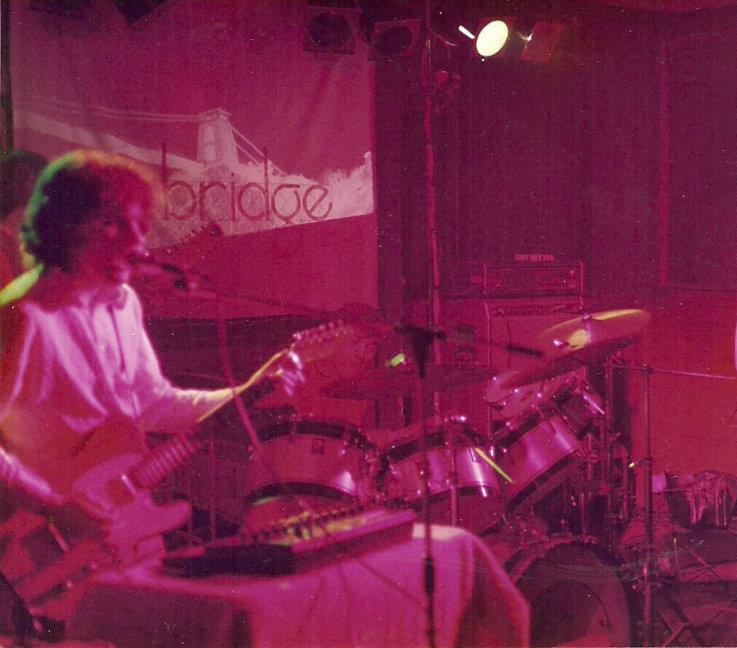
Astonished as I was by the audience’s favourable reaction, there was one last hurdle to get over. We’d saved our ‘best’ number for the encore. (Well, our longest, anyway.) Called ‘Penwith’, It was inspired by a book I had on stone circles in Britain – yes! I know! – and consisted of an opening soundscape, a cosmic guitar riff, a fast bit with lyrics by Sean, another soundscape and finally a weep-you-bastards-WEEP! guitar solo. As we went into it, I had a ‘What the hell was I thinking?’ sinking feeling. OK, so the audience has been great up ‘til now, but this was taking things much too far. Surely. All those accusations of self-indulgence and pretention haunted me through every note and beat. Finally, my Telecaster howled and crashed its last –
And there was dead silence.
That was it. I’d gone too far this time, and killed the band on our first city gig.
Then I became aware of this strange noise – a sort of distant murmuring that gathered volume, modulating to a kind of hiss, and then a roar; clapping, whistling…. They liked it! They actually approved!
*
My brother-in-law and music publisher, Paul Rodriguez, came up with a plan for us to make a video. He suggested that I contact the University of East Anglia’s video department and see if I could interest them in the project.
This probably would have worked anywhere else in the UK, but there was always a bit of a funny vibe between the UEA and – well – anything outside it. At about this time the Norwich Scene was taking off: Norwich was tipped to be the Liverpool of the ‘eighties. Certainly, bands like The Higgsons and The Farmer’s Boys were making names for themselves nationally, but they were UEA bands, and the promoter at the university took a very dim view of any off-campus group or artist. I was passed on to Nexus, the UEA’s video society, who were actually very keen and helpful. The only problem was that they only had home video cameras. However, this could be dealt with by putting the resulting video through an extremely expensive gizmo called at timebase corrector, which would bring the video up to broadcast standard.
Meanwhile, I contacted the dance teacher I’d known at drama college, Sue Wells. She’d left the college by now, and was keen to help. It looked like we were set to become the first band ever to self-produce a video.
Sue brought two promising dance students with her, and shooting began during the weekend of the Royal Wedding in 1981. Graham, however, didn’t turn up on the first day – I think it clashed with football, or something. I was a bit unreasonable about the whole thing, but I was young and mouthy.
Then reality took back control. Anglia TV didn’t want to know because they were like that in those days. (Why support local talent?) The local BBC, however, were keen to screen the video, but in order to do so it had to be put through a timebase corrector, as mentioned above. The nearest was in London, which wouldn’t have been a problem, but….
These were still the days of closed-shop unions. The Rules stated that all such ventures should involve only – and the right number of – union members. We’d used a single camera, which was fine, but we hadn’t used two men to operate it. (This went back to the days when TV cameras were huge structures on wheels that required one person to do the actual filming and the other to pull and push the thing around. This hadn’t been a physical necessity for some years, but that didn’t change the rules.) We also hadn’t used a sound engineer on location. The sound track was two songs we’d already recorded, ‘To Absent Friends’ and ‘Better Times’, which were played off a cassette on location so the dancers knew what they were moving to, but the sound track proper was dubbed on later. We’d also failed to employ the requisite number of lighting technicians (we filmed in daylight). In fact, who knows what size army we should have employed… or where we would have found the money.
So, sniffed at by Anglia and black-balled by the unions and Beeb, we nevertheless sent the master to London to be copied and marketed. Despite having been assiduously wrapped it in foil, padding and what-all, the master arrived blank. The whole thing had been a waist of a number of people’s time and money. Chalk it up to experience, but I still feel dreadful about those two dancers and Sue Wells.
Very soon after that, Graham decided to leave the band. I think it was something I said or did, but whatever it was I never found out. One evening, when Sean and Dave turned up to rehears, they brought the news that Graham wasn’t coming that evening, or ever again. Later, one of our friends told me that Graham had said that I was an arrogant, pompous, stuck-up git, so it must have been my fault. Perhaps he was right, and I just never realised it.
Amongst his rock-band’s-survival kit, Sean had a bass, and an amp to go with it. I just had to show him how to play it, and he took to it like a duck to water.
And then Richard Friar (now Penguin) introduced me to Stephen James Bennett.
Second Movement
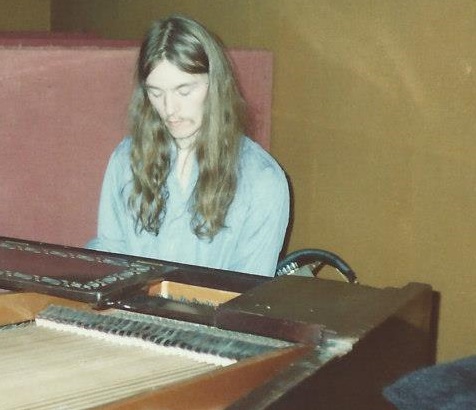
Last Orders At The Bar was the name Stephen gave to a one-time-only band he put together for an event which never came off. It involved many of the local great-and-good, and one or two hopefuls like me. The idea was that most of us, anyway, would put forward pieces of music, arranged amongst whoever wanted to play on them, and create a kind of pan-musical happening.
I was always, and still am, slightly in awe of Stephen. He was a proper musician, with a real Hammond organ and a Moog. He could read music, and get other musicians to play what he wanted them to play without annoying them. Now that really is a feat. Sadly, he didn’t want to join Airbridge, encouraging as he was about the band. However, there was a young man at these rehearsals, recently returned from studying architecture at Bristol, who was likeable, good with a guitar, and willing to at least audition.
His name was Edward Percival, he could sing and find his way round a keyboard as well as the guitar. He could also write songs.

Although we had to go ahead with the next gig as a three-piece, Edward guested with us on a couple of tracks, and then joined us full time.
Many years later I heard him give an interview on a podcast, and it was fascinating, if a little sad, to hear his impressions of that time. He thought that it was my choice to be the only writer in the band, and that I was controlling everything. I was probably as opinionated as anyone in their early twenties, and obviously capable of saying things that made bass players leave, but my intention was always to try to accommodate other members’ musical tastes – usually by including their material into the set. Unfortunately, at that point, Dave didn’t want to write, and Sean offered lyrics along with suggestions of how he wanted the music to sound, but when it came to the nitty-gritty of creating the music, that fell to me. I was actually very happy to have a bit of new blood in the writing department.
Edward already had a song he’d written about Le Corbusier, the famous/infamous brutalist architect, but when Sean produced a lyric entitled ‘Paradise Moves – A Bridge in the Air’, Edward decided it fitted his music perfectly.
‘Wavelength’ was written during one of our rare jam sessions – rarer still that it produced anything – but while Sean supplied the title, Edward came up with a strong lyric and solid, catchy melody line. As a piece of electronic pop-rock I felt it perfectly counterbalanced our more portentous material. Similarly, his ‘Round Dance’ was a brilliantly catchy should-have-been-a-single type song about the human condition.
So, with Edward bringing in his own song writing talents, and sharing vocal/guitar/keyboard duties, we were actually developing a sound. This was getting serious and exciting. Moreover, there was just about enough money in the Airbridge account for us to hire a studio for a day. Someone had the idea that we could produce a cassette tape to sell at gigs. In fact, a number of our fans had been demanding just this for some time.
When Paul Rodriguez got to hear of this, he asked why we didn’t just record an album(!) He spoke to Peter Scherzer of Red Lightnin’ Records, arranging a possible ‘lease-tape’ deal.
Dave’s father, the much-loved Cliff Beckett, was the owner of Beckett’s Government Surplus Stores, and subsequently had A VAN. This made Dave our driver, and we set off on a particularly snowy evening in January 1982, for London, and Hallmark Studios, a 16 track in Regent’s Street.
Steve Hall was – and I hope still is – one of those dream engineers who discreetly produces, but without interfering in the artist’s original vision. He adds to ideas, rather than contradicting them. Nevertheless, when I told him that we were going to record eight backing tracks, he was initially sceptical.
However, for the past couple of weeks we’d been rehearsing this recording session, playing through each of the chosen songs in most cases without vocals and precious little ‘arrangement’. Just drums, bass, guitars and keyboards only where necessary. There was, however, a Hammond organ and a Prophet V that we couldn’t resist. Unfortunately, Steve didn’t much like my guitar, and handed me another Telecaster, but with much heavier strings. He also didn’t much care for the sounds I was getting from the HH Moss Fet amp I was using (Sean’s, of course.) So, with sounds I hadn’t planned for, and a guitar I wasn’t used to, and which wasn’t used to me, we embarked upon on one track after another. The last of these was ‘Penwith’, intended as the closing number. Of everything we’d recorded that day, this was the one track that I felt wasn’t going to work. I just hadn’t got the sounds I wanted for it.
The other problem track was ‘Wavelength’. When we wrote it, I was playing a tiny Yamaha PS 1 keyboard, put through a flanger and Edward’s Wem Copycat tape echo. The initial rhythm was set up by the PS1’s onboard rhythm box, while I played a riff over the top, using short notes that then echoed, harmonising with each other, and the song built itself from there. In the studio, we explained all this to Steve, who set up a lovely tape echo… on foldback only. What we heard in the studio was not what went down on the quarter-inch stereo mix.
My sister, Arabella, had married music publisher Paul Rodriguez, and they had an eight-track in the back room of their maisonette in Hampstead. It was to here that we went that evening, while Arabella, Paul and their daughter Lucy took refuge in Norfolk. The idea was that we’d transfer our two-track master to the eight-track from a Revox. Unfortunately, the Revox had at one point had a vary-speed control that had somehow gone missing, after the speed had been – well – varied. It played our backing tracks slightly too fast, which admittedly gave them a slightly more up-beat, brighter sound. At the time. However, there was a hybrid keyboard with all sorts of sounds on it that we just couldn’t use, because it wasn’t in tune with the tracks. We could just about use the Yamaha CP electronic piano, if we cranked the tuning as sharp as it would go, and the Wasp Delux, a Wasp synth with a real keyboard, which could be tuned up or down easily.
However, it was here, at Arabella’s Studio where we found that the echo on ‘Wavelength’ was missing, and that ‘Penwith’ just sounded horrible: rusty and crunchy in the parts that were supposed to be ethereal, generally too hurried, and with a closing guitar solo that had all the depth of feeling and alure of yesterday’s boiled haddock. Because I now only had the two-track stereo backing track to play with, re-recording the guitar solo, or any of the rest of it, was completely impossible. And that’s when I made the most stupid decision of my musical life. I didn’t realise that the album would have been long enough without ‘Penwith’ – it later turned out to be long enough to cause technical issues at the cutting stage – and I panicked. I came up with the idiotic and tactless idea of replacing ‘Penwith’ with a track I’d recorded with Steve Hall in 1979. ‘Visitation’ is an instrumental featuring me on guitars, bass and voices put through a phaser (but no lyric), and Steve Hall playing the drums and his partner’s APR 2600 modular synth. His business partner was Mike Hugg, of Manfred Mann, and I think it’s the very same synth you hear on ‘Joy Bringer’. However, spurious claims-to-fame apart, I only later stopped to think how this addition of a non-Airbridge track might affect and offend the others.
Nevertheless, Peter Scherzer accepted the recordings and signed the lease-tape agreement with Paul Rodriguez Music (PRM), we signed a publishing deal with PRM, and Edward did a beautiful cover design.

All very cosy, but then came the long wait. A year passed until the official release date in 1983. For some reason, Peter Scherzer would only talk to me, so naturally the rest of the band blamed me for the delay. It was ‘my deal’ that had turned sour. We did, however, get 25 advance copies in December 1982 to sell at gigs. Finally, we got to hold copies of ‘Paradise Moves’ in our hands; a real album, with visible grooves and a hole in the middle, and everything!
Listening to it, though, I found that where the Revox at Arabella’s Studio had played back too fast, the tapes were correspondingly too slow when played back in the cutting room, where a tape recorder that played at the right speed was used. All the brightness and bounce had gone out of it. Compared to the cassette mixes we had from Arabella’s Studio, the vinyl version sounded glum and turgid.
But never mind. We were an ‘Album Band’ at last! We had arrived!
Hadn’t we?

*
Well, in the meantime, things were getting less cosy and rosy within the band. As the months passed without any news of a release date for ‘Paradise Moves’, fans became impatient with the band, who became impatient with me.
Moreover, we had lost our original rehearsal room – the neighbour of a neighbour complained about the noise – and Sean’s parents gave Sean, and us, a mobile home for his birthday. This was parked outside the house where I was living, where there were no neighbours to complain.
So, with the rehearsal room outside my home, the rest of the band would have to make the pilgrimage from various points in and around Norwich. Dave Beckett, who kept the books, found that as we’d only spent £240 producing the album (at a time when a cheap album was reckoned to cost £15,000), we could afford our own van, and not have to keep using his father’s. We also picked up a much-used comprehensive PA system, with mixing desk, onboard effects; the whole shebang. To operate the thing, as well as to drive the van, we also acquired Dave Allaway.
The result of all this was that the van would pick up all the band members except me, obviously, bring them to rehearsals, and take them home afterwards.
The evening came when the band arrived, and I was informed that we were becoming a pop group. In fact, I was told that I had already agreed to this, in as much as ‘we’ had already agreed to this. All the old material was out – well, my material, anyway. Two lacklustre gigs later, one at The Rock Garden, the other somewhere in Great Yaremouth, where we were considered too awful to be rebooked, we changed direction again. ‘Penwith’, ‘To Absent Friends’ and maybe one or two others of my songs were back in the setlist, but Edward was to be Lead Singer, main songwriter and band leader generally. All this was again something that ‘we’ had decided. Of course, I realised what was happening. ‘Things’ were being discussed and agreed upon in the van, to and from rehearsals, which was why I was never party to these discussions.
I discovered many years later that Dave Beckett never really liked any of my songs, but they at least provided him with something to drum to. Naturally, I feel a bit guilty about this: putting someone through an experience for two or more years that I had refused to go through myself. He was very good never to have said so at the time. It was in (I think) 2006 or 7 that the four of us discussed reforming, and Dave produced a list of songs he thought we should do. Not one of them was mine.
Meanwhile, back in 1982, I began to sense an anti-Lorenzo feeling growing in the band. I told my self I was just being silly, paranoid, even, until one evening, Dave Allaway told me more or less that he felt the same way. Out of earshot from the others, he said something like, ‘You seem to have gone from being the mainstay of this band to session guitarist.’ So, it wasn’t just my imagination. Sean also felt that Airbridge had lost its original direction and, for him, early promise. We were moving away from what we’d originally wanted to do, but Sean is a very shy sprite. He voices his true opinions to friends in private, but in group discussions he remains silent, looking either miserable or happy, depending on which direction things are taking.
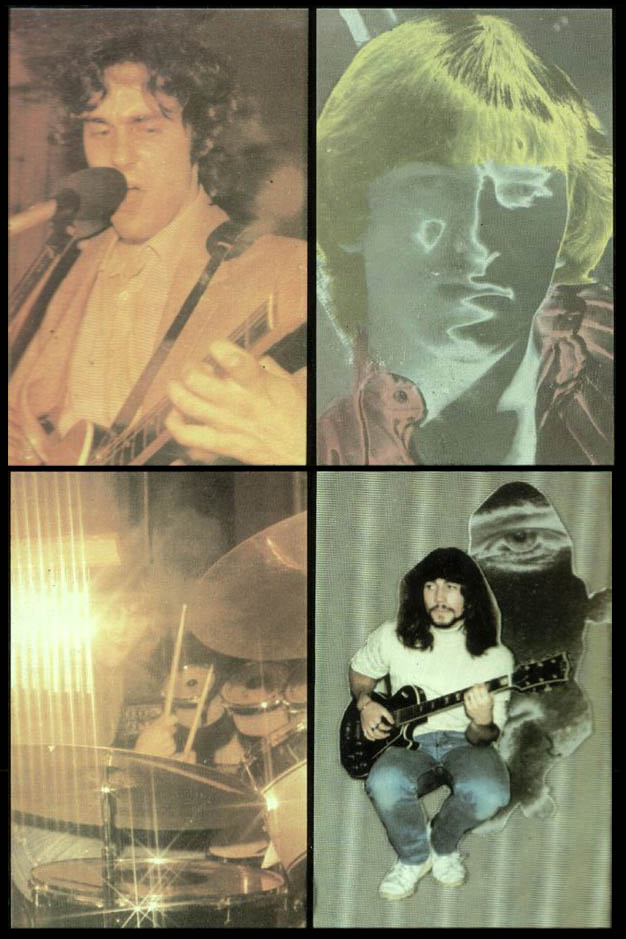
At the same time, I began to experience what authors call writer’s block. For the first time in my life, I found that it was really hard work trying to write a new song. That might have been because I had by now accepted the fact that anything I wrote would be rejected out of hand, or it might have been because I’d been writing, writing, writing since the age of about 14, and I had to dry up sometime.
None of which means that Edward wasn’t a good front man. He was, and still is, a great performer. God knows where he found the clothes. Possibly the same theatrical costumier that provided the grease paint. His ability to communicate and control an audience is second-to-none, and his song writing was going from strength to strength, as mine declined.
And then, in September 1982, Dave Beckett introduced me to my first wife.
Third Movement
In the centre of Norwich, just outside The Close, is a square that rejoices in the name Tomb Land. If you stand with your back to The Close, you’ll see, over to your right, a building whose portico is supported by two very old statues said by historians to depict the gods Gog and Magog. These two deities of gentlemanly bearing, however, fell out of favour with the somewhat pious local authorities, and the building became known as the Samson and Hercules, or ‘Sam and Herc’ to the locals. Although it has often been rebranded, reopened and refurbished countless times, it still remains the ‘Sam and Herc’. I can’t remember what official name it had when we played there with Undergound Zero, whose guitarist had recently observed that ‘Airbridge is just an extension of Lorenzo Bedini’s ego,’ a remark that went down rather badly with Edward. A couple of nights before, Dave Beckett and Sean, maybe Dave Allaway as well, had been out flyposting for the gig. Somehow they’d fallen in with a bunch of friends amongst whom was Caroline Dewing, a girl who’d been at school with my sister. She rather took a fancy to young Master Beckett, and somewhere in conversation my name was mentioned. Was I anything to do with Arabella? Yes, he’s her brother. Caroline made a vague promise to come to the gig, thinking that in fact she wouldn’t, but a friend let her down on the night in question, so she came anyway.
I don’t really remember our first meeting, except that I was setting up my gear when Dave came over and said, ‘This is the girl I was telling you about.’ Caroline remembers liking my smile, and later told me she couldn’t decide whether I was good looking or interestingly ugly. Anyway, after the gig she drove me back to her place, a farm where she lived with her parents and where she kept horses. Those horses were to play an important role later on.
Our blossoming relationship combined with my feeling that I was no longer wanted in the band (but where would they rehearse if I left? Ummmmm….) made rehearsing and gigging something of a chore for me. When Stephen James Bennett joined the band, I felt a new lease of life; the music took a turn for the better and there was someone in the band who was prepared to be encouraging about my input. I found I was making contributions to the material again. As a five-piece we recorded the single ‘Words and Pictures’, by Edward Percival, with my song ‘Zero Minus One’ for the B side. Egos clashed when I suggested I take the lead vocal on ‘Zero Minus One’ – in those days Edward couldn’t get the higher notes, but he insisted that he was the lead singer. I pointed out that I was supposedly the lead guitarist, yet he was playing the lead guitar on ‘Words and Pictures’, but life’s too short for such squabbles. I had, however, written a guitar break in my song that went into a strange time signature. I did this specifically for Dave, who felt our repertoire had never really stretched him enough. Many of our fans felt the same, so I came up with this guitar figure, one bar of eight, the next of seven. Rehearsing it on my own, it went fine, but when we played it as a band it went embarrassingly wrong. Being a fake musician, I wasn’t able to transmit the idea to Dave, and when we came to record it I just muted my guitar at that point, leaving the drums, bass and Stephen’s cavernous synth chords to do the work. At the time, Stephen said ‘Wow! I’ve never seen a guitarist wipe one of his own solos before!’
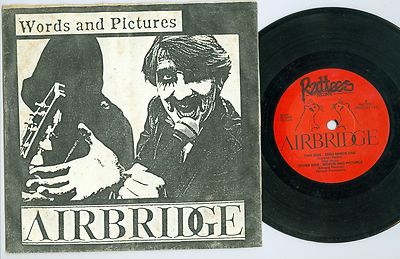
It has to be remembered that Stephen had been in a band with Crow Magnon, who, during a musical discussion, had thrown his double neck Gibson at Stephen’s head. (I told you he wasn’t afraid to use it.) I’m very glad that the two never made contact, but Stephen had an understandable caution towards guitarists’ egos for a long time afterwards.
In the second verse of ‘Words and Pictures’, I’d arranged the guitars so that Edward would play arpeggiated chords lower down the guitar neck, and I the corresponding chords higher up. This created a pleasing harmonised latticework of sound behind the vocal. We all rather liked the effect, listening back during mixdown, but I don’t think Edward liked a ‘Lorenzo idea’ working quite so well, so he mixed both guitars out. We did play it like that live, however, and there’s a recording in existence on the illusive ‘Farewell to the Count’ live cd, that sounds rather good.
*
Around the time that Stephen joined the band, there was another, well-intentioned, factor that increased my lack of enthusiasm.
Now, I have to say, I’ve seen video footage of myself on stage that convinces me that I’m no performer.
To tell the truth, I’ve always been happiest in the studio, where you can at least attempt to make your song sound to the outside world the way it does in your own head. Every time I presented a new song to the band in those days, the other members would join in about a quarter of the way through, jamming along without ever having heard the song in its entirety; without any sense of its narrative or landscape. Nowadays I can just record the song on my own and give my fellow musicians an idea of what I’m working towards, but in those days there just wasn’t the affordable technology. I must say, I was just as bad as all the rest, letting my ideas run away with me on someone else’s work. Years later, if Dave Dowdeswell-Allaway put forward a song at a band rehearsal, I would step away from the keyboards, put my guitar on its stand, and sit down and listen. Then we’d discuss what he wanted, with the proviso that sometimes the best contribution I could make is to play nothing at all. I do believe in the sanctity of the writer, and I remember that feeling of hearing enthusiastic applause and thinking, Yes, but that isn’t how the song’s supposed to sound. If we ever get the chance to record it, in a multitrack and with all the correct arrangements in place, you’ll know what I mean. Time and again, I felt the audience had been fobbed off with a pale imitation of the real thing.
While I nevertheless enjoy playing live, I’ve seen the video footage. And it ain’t great. Where other guitarists strut, I shamble. Where other performers communicate with the audience, I’m locked in with the instruments I’m playing.
I have no charisma whatsoever.
Now this might seem a digression, but bear with me. It came to light in some conversation or other that Italy has, as I put it, attained egalitarianism through excessive aristocracy. Unlike in England, where titles go only to the eldest son, in Italy, and a number of other countries, titles are inherited by all the children, although when a daughter gets married she acquires her husband’s title. So, anyway, everyone in Italy has a title of some sort or other. In a country where the average person is the 16th or 15th cousin of any other average person, it’s inevitable. Mussolini, however, put a tax on titles, so back in the day just about everyone stopped using them. The question naturally arose: did I have a title? Well, yes, but the very lowest of the low. Stretching a point, I could possibly lay claim to being a scum-of-the-earth Count.
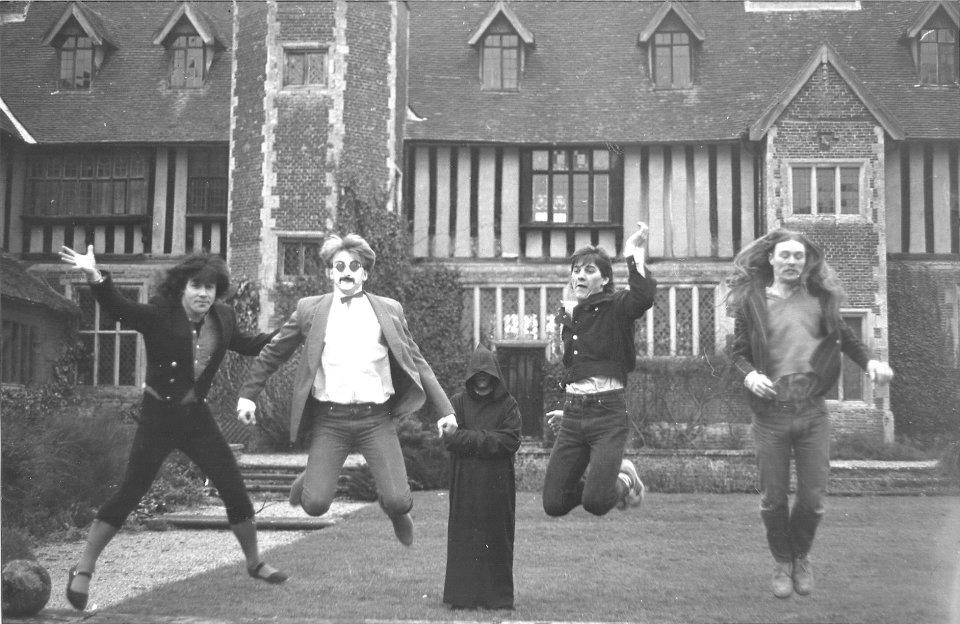
The rest of the band loved the idea. Hence forth Lorenzo Bedini no longer existed. Airbridge’s lead guitarist would be referred to simply as The Count. Furthermore, to make up for my total lack of charisma, Sean’s girlfriend, also called Caroline, and a friend of hers made me this kind of black monk’s habit, whose hood hung forward obscuring my face in shadow… and completely removing the real me from the stage.

Soon after, or maybe around the same time (early 1983) Fields of the Nephilim did the same to their guitarist, and I always felt sorry for him.
Being on stage in front of an enthusiastic audience you can’t see, with musicians with whom you can’t make eye-contact, can be an absurdly lonely experience. I even got to play the Marquee with Airbridge, and for the bulk of the gig I might just as well have been practicing at home.
I say, ‘for the bulk of the gig’, because we were the support act for Trilogy, who, lucky buggers, were doing exactly what I wanted to be doing. They were and are extremely nice guys. Fortunately. On our arrival we were told by the DJ that support acts play no more than 45 minutes, and on no account go back on stage for an encore. This is FORBIDDEN.
After our set, back in the dressing room, I’d escaped the sweaty confines of the monk’s cowl, when the DJ came in and said, ‘I think you boys had better get out there again.’ So, in my shirtsleeves and free of the cowl, I did get to meet our audience after all, as we played two more numbers.
Not that we upstaged Trilogy – well, you couldn’t: they are a fantastic band, and I remember feeling so envious of them: They were doing exactly what I’d have liked Airbridge to be doing. But in our own way we’d made our mark.

*
The last gig I remember playing with that incarnation of the band was my favourite. It was at Whites, and billed as my last performance with Airbridge. Someone recorded it straight off the PA mixing desk, but – here’s a tip – had some extra mikes to pick up the audience. Live recordings can sound disappointingly unenthusiastic if you don’t do this. The stage mikes don’t really pick up the audience.
But to explain: by this time, I was engaged to be married to Caroline, who, as I say, kept horses. Her horses were as important to her as music was to me. Airbridge, however, wanted to move to London, believing that it would be an important step for their career. And London is no place for horses. It was really an excuse for me to pull out of a band I felt had long ago ceased to believe in me.
So, the Farewell Gig came to pass.
Bless them, the band decided to make the evening all about me. No cowl, so I could see and interact with the audience (who were these lovely people?) and I was even asked to sing the songs I had written. Neither were my backing vocals on Edward’s songs mixed back to almost nothing. The mix on stage was fantastic, as, apparently, was the sound out front. The two don’t often go together, but that night they did.
I’ve since heard the recoding of that night, and the energy is extraordinary. Many years later, when Sean brought me a cassette mix, I listened to Dave Beckett’s count in for ‘To Absent Friends’ and thought, We can’t possibly have played it at that speed! Surely it must have fallen apart after the first couple of bars.
But it didn’t. And we did.
Fugue
And so, as a married man I found myself sinking into a quagmire of middle-class mediocrity. The world I’d nurtured in my head and my heart slipped away from me. Caroline felt that my departure from Airbridge was also a departure from my only real chance of making any money. Dead end jobs that promised far more than they delivered came and went. However, in early 1984, an old friend and keen guitarist, David Hill, asked me to audition for a cabaret band he was about to leave. The group, as they preferred to be known, were called the Yarebeats – sort of like the Mersey Beats, but from Great Yaremouth, where the River Yare flows out to the sea. They/we specialised in early ‘sixties pop songs: the Beatles (but nothing after 1965), the Swinging Blue Jeans, the Searchers…. At one point I introduced ‘Nights In White Satin’ to the set – very risqué, but such a standard we couldn’t really ignore it. Anyway, it certainly came as a relief to me after ‘Sweets for my Sweet’ and ‘Needles and Pins’. Great songs in their way, and they certainly stood the test of time, but two-chord tricks get a little tedious night after night.
Actually, I was an ungrateful swine. On the one hand, I felt miffed that the Yarebeats could pull a couple of hundred pounds a night by playing hackneyed hits from yesteryear while Airbridge, who had been pouring our hearts out with carefully composed original music, just about got enough for the diesel home. Furthermore, if you listen to a lot of those early ‘sixties hits, the lead guitar does hardly anything at all.
But all of that’s just sour grapes from me. In fact, Mike, Andy and Ian were very talented musicians, and they gave the people what they wanted. I was in my twenties and still had a lot of growing up to do, and a lot of excess ego to slough. Also, I felt like someone who had climbed Everest, and was expected to be excited about Ben Nevis. Pink Floyd summed it up perfectly in their song, ‘High Hopes’. Copyright laws forbid me from quoting relevant passages from the lyric here, but those of you familiar with the song will know what I, and they, mean about tastes being sweeter, the light being brighter, and time taking our dreams away.
*
But the computer age was coming fast upon us, and I was in great danger of being left behind. I left the Yarebeats in order to enrol in a full-time computer studies course at Norwich City College of Higher and something-or-other Learning. What us locals still called the Norwich Tec.
To explain to younger readers, in those days home computers had to be programmed using computer languages like Basic (not really a computer language at all, because it’s too much like English, so the tech snobs didn’t like it) and Pascal, which was the computer language that was going to take over the world, but never did, because the new generation of computers that the user didn’t have to program was just around the corner. A year wasted. Never mind, more where that one came from.
Sometime around then, sitting in a bedroom with my guitar and searching for inspiration, I remembered something that Stephen had once told me about how he writes songs. He said that he might just let his hands fall on the keyboard, creating a random chord. He might move a finger here or there, but whatever voicing he got would form the basis of what he was going to write. I decided to try the same thing. Finding I was holding a full D, I moved my index finger off the G string, and put it onto the corresponding fret of the A string. Strumming created a cacophonous mess, but when I picked the strings, my memories of evenings spent on or around Archway Road… the backstreets of Highgate, crossing Hampstead Heath at night came flooding back to me. And so ‘Quiet Sky’ was born.
Community Music East was far more interesting; conducting music workshops in youth clubs, mental hospitals, care homes and prisons. The only drawback was that this was my first encounter with musicians who believed that drummers and drumming generally were the be-all and end-all of music. If you tried to do anything involving melody and harmony you were really chancing your arm.
Around this time, I began to learn that the arts in general demanded that the artist be ‘different’. But only in the way that everybody else was being ‘different’. Anyone trying to be ‘different’ in a way that was genuinely different wasn’t going to be allowed into The Club. And there is always a Club.
My contract with Community Music East only lasted a couple of years. During that time, my first daughter, Millie, was born, and I had to find something that barely existed then: a steady job.

But I digress. This is supposed to be about Airbridge, less about me.
Things didn’t go well for them in London, I’m afraid. Very often a group of people with a shared interest think that this is enough for getting on in shared accommodation. I wasn’t there, so I don’t know, but I’m told that the realities of living together – who was tidy, who was not; who put more into the kitty, and who was freeloading, all that kind of thing – can outweigh the finest guitar solo in the world, or the ability to hold a 7/9 rhythm. The fact that one member was caught secretly auditioning for other bands like Pallas didn’t help matters. Stephen left, the band returned to Norwich with the tremendously talented Geoff Chamberlain on guitar. I saw them a couple of times in Norwich, and although it rankled with Sean that Geoff refused to play the guitar parts that I’d written, I was intrigued by the way he interpreted the basic ideas.
Somewhere along the line, Edward and Geoff left, Stephen Bennett re-joined, and after some scouting around, the band found Mark Spencer to take the lead vocals and Mark (‘Scoop’) Wyatt on guitar. Dave left to join Fusion, a band from his home town, Ipswich, which had already spawned the by then successful singer-songwriter, Nick Kershaw. He was replaced by Steve ‘Fudge’ Smith, who went on to work with Henry Fool, Steve Hackett, Pendragon and Timecollider. With such a different, but nevertheless strong sound, a new name was in order. Airbridge became first The Host, and then La Host. They really began to go places where Airbridge never quite did.
In the meantime, I became the father of a second little girl, and was working at Majestic Wine in Norwich ten hours a day, usually at weekends. Jealous of my time with my daughters, I had little or no opportunity to keep up with the local or national music scene.
At one point Morgana, a band who were being seriously flirted with by Prince’s manager and Dave Ambrose of EMI invited me to join as lead guitarist. They even popped into Majestic one day with a guitar, and asked me to show them how to play ‘In Flight’, a song I’d written for Airbridge in 1981, that they wanted to cover. I had to turn them down, as far as joining the band was concerned, explaining that I was still at work half an hour after they’d be going on stage. When they told me about their encounter with (a completely stoned) high-ranking music exec., it only re-affirmed why I couldn’t consider a career in the music industry when I had to be a responsible husband and father. Not least, because I was the sole income provider in the family. (That, by the way, was my wife’s choice, lest anyone cares to hurl the ‘Sexist Pig’ accusations my way.)
Then three things happened at once that changed everything.
Caroline asked me for a divorce. I said, ‘What about the children?’ She said, ‘I’ll make their lives misery while you’re at work if you don’t give me what I want.’ So. Done deal.
Arabella was making an album, and asked me to play the guitar on it. With Caroline no longer resenting the very idea of my being away for twenty-four hours to ‘play around’ with anything as frivolous as music, I was free to go to London, guitar and amp in hand, and contribute to what was to become ‘Strange Blue Breakfast’. The album did well, and, although I only actually met Sylvia Powell, a singer-songwriter of some repute, I’m in very good company on that disk. Ashley (Fatboy Slim) Slater (bass and vocals), the singer Caron Wheeler (Soul-II-Soul) and Keith Le Blanc on drums, to name but a few. I was really very touched that Arabella asked little hairy me, when she could have had…..
And thirdly, I ran into Sean, who told me that copies of ‘Paradise Moves’ were selling on the net for £250 a pop. That’s £5.00 per copy more than the album cost to produce.
Obviously, it was time for Airbridge to re-form.
Fourth Movement

Easier said than done.
I had moved to a tiny flat above my brother’s garage outside Newton Flotman, an idyllic spot amongst trees and more trees. The kind of place I find inspiring; indeed, Sean’s nephew once asked me, if I lived somewhere different, would it alter my music? I said Yes.
There was, as I mentioned earlier, a rehearsal with Dave Beckett, Sean Godfrey, Edward Percival and me at some rehearsal studio in the industrial outskirts of Norwich. At one point, while unloading the gear we spied our pre-Percival keyboard player, who shall remain anonymous. Suffice to say, we’d managed to fire him without his particularly noticing, just as he didn’t notice us now.
Phew!
This rehearsal, and the coffee-at-Dave’s afterwards, was an enthusiastic and hope-filled affair, and I shrugged off my disappointment that none of my old songs were on the proposed gig list. I’d written quite a few new ones since, and I’d see how they went down when the time came. However, the real stumbling block was that while three of us lived in the same area, Edward was now based in Windsor.
A second rehearsal took place some time later, this time with Sean, Dave, myself and classically trained viola player (also a dab hand on keys), Greg Sheppard. Dave had become a pretty good vocalist, taken up the acoustic guitar to great effect, and was writing some very good songs of his own. Unfortunately, someone had filled his head with stuff about What The Kids Want Today, and wanted to strip all the music down to the barest chords. At one point he suggested we do ‘To Absent Friends’ without its guitar riff. Those of you who know the song might agree that that would have been like Deep Purple doing ‘Smoke on the Water’ without its famous riff. Or Jerry Rafferty’s ‘Baker Street’ without the sax. (Hey! Wait a minute: somebody tried that in the ‘90s. Got nowhere, as I recall.) Anyway, fare dues: Dave wasn’t really that interested in Prog, or Airbridge, any more.
Things just weren’t gelling, but then Sean reintroduced me to Mark Spencer, formally lead singer of La Host.
On our first meeting, Mark gave me a guitar! To forestall my polite refusal or my obsequious effusions, he told me it wasn’t much good, but I could see how I got on with it. It was brilliant.
The next time we met, he gave me a recording studio, in the form of a desk-top with Cuebase installed. Arabella had moved to Italy, and left me with her beautiful Korg 01 Workstation keyboard, so other people’s generosity was coming upon me thick and fast.
Meanwhile, through Greg Sheppard, the viola player, and his Czech girlfriend, now wife, Barbara, I met a young Czech couple, Swatapluk and Pavla. Apart from playing the acoustic guitar, Pavla was a fantastic singer. At one point I was invited to meet her at her singing teacher’s house, where I ran through a song I wanted her to sing on the teacher’s piano. They were both touchingly enthusiastic about the song, ‘Save The Day’, and she came to my flat a few days later to record it. (A version is available on the net, should anyone care to look. Pavla’s massed vocals behind the instrumental break are a real treat.) When Sean heard it he agreed she should be invited to join the band.
She was, and she did.
So, with Sean on Bass, myself and Mark Spencer on guitars and keyboards, and Pavla with her voice, all we needed was a drummer.
And the ability to all be in the same place at the same time….
Things became stalled again, just because of the practicalities of life. Sean told me that our once-upon-a-time live sound engineer, Dave Allaway, had become something of a keen multi-instrumentalist, and was offering to play the drums for us. Once again, logistics got in the way. Apart from anything else, I didn’t have the facility to record drums.
Then a couple of friends introduced me to Melanie, a young senior doctor at the Norfolk and Norwich Hospital. She was most supportive of the Airbridge reformation, and, having studied the violin and the oboe, was no musical slouch herself. We were together for a blissful two years, the last six months of which we were married.
Melanie’s dedication to the healing arts was second to none, as was that of her role as teacher. The increasing mountain of pettifogging bureaucracy that was landing on her and her colleagues, she found rather less inspiring. One day she told me what her average working day consisted of: a morning patient list of something like 126 individuals, an afternoon list no smaller (so forget lunchbreak), piles of paperwork, training up the junior doctors – and doing the same thing simultaneously for another doctor who was so rubbish he had to be sacked. But he couldn’t be, for legal reasons, so he was on permanent ‘gardening leave’, which meant that he was paid half his wages just to stay away from work. Which in turn meant that he still had a patient list (not having been officially sacked), and that list was passed on to Melanie, on top of the one she already had. I said that it was impossible, and therefor unjustifiable. She countered with, ‘Yes, but I’m paid an obscene amount of money to do it.’ I pointed out that no amount of money can alter the fact that there are only sixty seconds to a minute, but she didn’t feel that this was the kind of argument that would make sense to NHS admin.
So, stress, coupled with skipping meals, led to the beginnings of anorexia, which in turn resulted in a collapse of her immune system. A rather nasty cough went round which we all caught and got over in due course. Except Melanie. She collapsed in my arms with what was later diagnosed as scepsis on the lung, and died four days later in the Critical Care Complex at the Norfolk and Norwich Hospital.
None of which, you might say, seems to have anything much to do with Airbridge.
And yet it does, because there I was with a fat NHS survivor pension and a world that had just crumbled away. Friends and family, Melanie’s as well as mine, were anxious about me. You see, if a couple naturally breaks up, each one of them is free to move on to something new. But Melanie and I hadn’t split up. Unlike after my divorce, I wasn’t desperate to find someone new. I’d had a relationship most people only ever dream about, and it was cut short, so in fact it never really ended. I’m still in love with her now, even though I only have her in the past, but at least I still have her.
But I had to have something in my life, as we all do. That something was Airbridge.
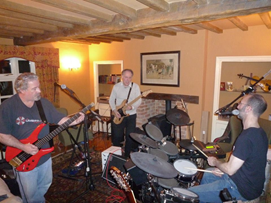
Dave, now married so now Dowdeswell-Allaway, brought his Roland electronic drum kit, his six- and twelve-string acoustic guitars, Sean his bass, and we started rehearsing as a three piece with the view that we could add Pavla when her job at the Royal Bank of Scotland allowed. Actually, it never did, and our first gig at Bedford’s (once the famous Orford Cellar) had to go ahead without her. She was understandably hurt that we’d been able to play some sort of gig in her absence, and decided to leave the band. It was a great shame, and I feel an opportunity missed, but, as they say, the Show Must Go On (darlings!)

Coda
Sean decided we should record a cd, but nothing too long or in anyway noticeable. He even had the track list in mind: ‘Return of the Light’, ‘To Absent Friends (version II)’ Dave’s ‘Who Pays the Ferryman?’ and ‘Quiet Sky’.
As a lecturer at the University of East Anglia, Dave was very much in touch with Stephen James Bennett, who, apart from being part of No Man, Steve Wilson’s touring band, was also head the Music School at the university. For some reason (bless him!) he felt that he owed Airbridge for having kick-started his career, back in the day. He organised two days for us at the UEA’s studio. In the meantime, I did as much of my songs as I could at home. Sean wasn’t happy about this, but he didn’t realise how short a time two days is in a studio. Afterwards, I think he realised that if I hadn’t done what I did, we’d have hardly got the rhythm track to one song recorded.
The cd, when it came out, sported a lovely cover illustration by Chris Hylton, who based his work on the beautiful design Mille did for our backdrop. Originally, Dave and I wanted to use Millie’s original design, but Sean thought it too different to all the other contemporary prog rock covers. I thought this a good thing, but I have a feeling he might have mistaken my opinion for nepotism. Millie is, after all my daughter. Anyway, Chris Hylton came to the rescue with his dramatic interpretation of Millie’s original.

Pierluigi, Arabella’s ‘other half’, organised a gig for us at Roccalbegna, where I now live – actually two gigs – during the Ferragosto festival.

We were invited back the following year, but Sean didn’t think it was the right decision. Dave and I, however, thought it was, so I pressganged my daughter, Millie, into taking up the bass. Father’s pride doesn’t come into it. She was brilliant, and Dave did say to me later that he hoped Millie realised how well she’d done.
Millie herself told me later how grateful she was to be invited into what she termed ‘the Airbridge world’, but work and career meant that she couldn’t join permanently.
Unfortunately, soon after that second (or was it third) Italian gig, Sean was diagnosed with cancer. I’m glad to say he made it, but it was a bumpy ride, and left him disabled for some time later. He agreed that a permanent replacement should be found. We auditioned a couple of worthies who liked the music but didn’t want to join the band, and then Matt Gamble came to the rescue.

Matt had been a fan in the early days, and was by now a proficient bass player and multi-instrumentalist. He also has a great singing voice, and Dave and I were keen to get some of his songs into our set. By now I had moved to Italy, but oddly, it was easier for me to hop a flight from Pisa to Stansted and then train up to Wymondham, where the rehearsal studio was situated, than it was for Matt to drive over from Wisbech. Nevertheless, we met, rehearsed and played the Cambridge Rock Festival in 2014.

We were also working on a new album, sending files to one another via a messenger service which will remain nameless. Everyone I know who used that particular app has given up on it. There was nothing to tell you if your file had been sent, was still being sent, or had just sent an icon but no file. Dave told me that he received quite a few empty icons from me, but some tracks. I never heard from Matt, until he told me he was coming out to Tuscany. It would be great to meet up. So we did, and it was during supper that Jo, his wife, opined wistfully that it would be great to get Airbridge back together. That was the first I’d heard of us splitting.
But split we had. I suppose Matt was fed up with waiting for sound files that never came, while I was wondering why he never commented on all the stuff I was sending him. He joined a blues band in Wisbech, while Dave started drumming for Penguins Go Pop, fronted by Richard Penguin (previously Friar.) I contented myself recording collections of songs which I then distributed on the net. I also became involved with La Banda Larga, a youth orchestra masterminded by Jason Crompton and Maddalena Pastorelli.
Then, one day, I began work on something I decided to call ‘The Memories of Water’….
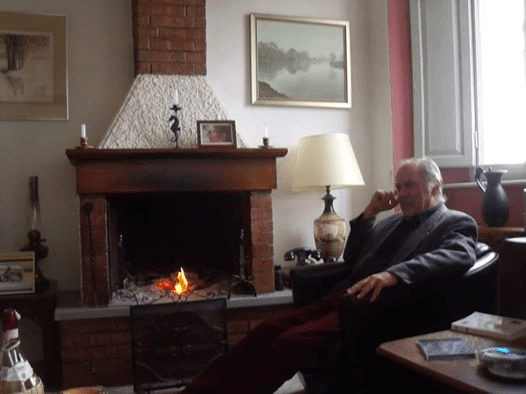
- Lorenzo Bedini, Roccalbegna, 2021


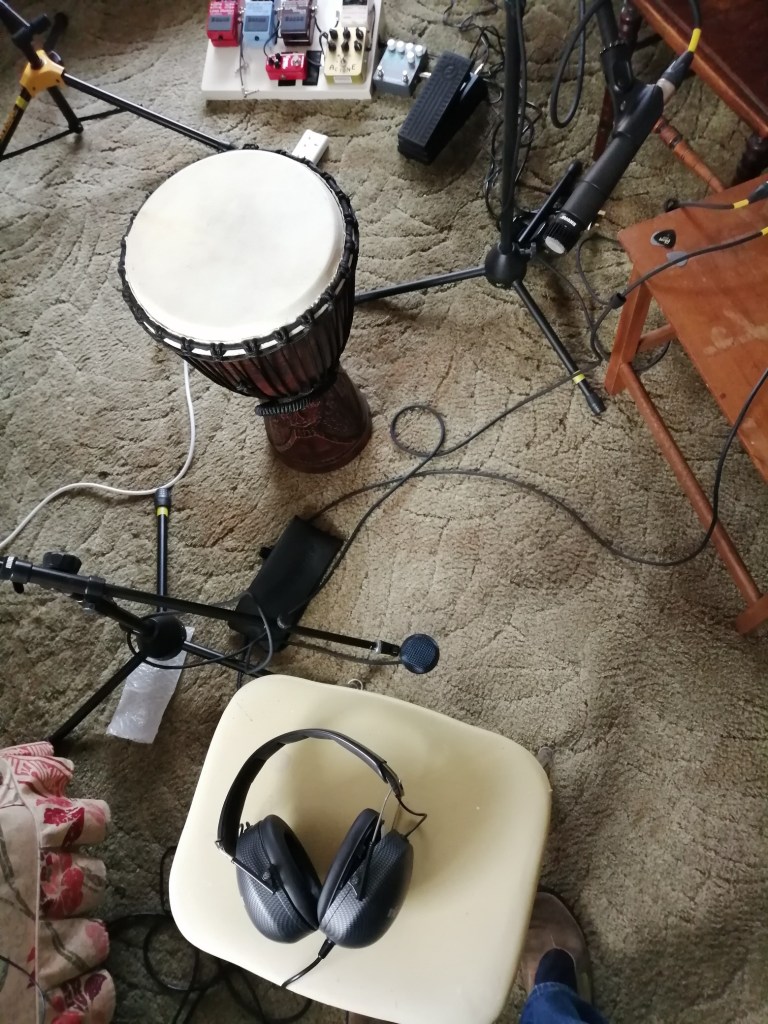
 Airbridge, the UK/Italy progressive rock band.